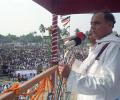
A new book by former West Bengal governor Gopal Krishna Gandhi claims that former chief election commissioner T N Seshan proposed an immediate halt to the general election process after Rajiv Gandhi's assassination in 1991 and even offered to become home minister. Gandhi, who was joint secretary to then president R Venkatraman, writes that Seshan was the one who broke the news of the assassination to the president and arrived at the Rashtrapati Bhawan "super-fast" that night. According to Gandhi's account, Seshan told Venkatraman that he felt the election process needed to be stopped and that he was ready to take on the role of home minister if necessary. However, Prime Minister Chandra Shekhar and Cabinet Secretary Naresh Chandra assured the president that the situation was under control and that there was no need to pause the election process. Seshan's suggestions were ultimately ignored, but he did manage to postpone the second and third phases of polling.
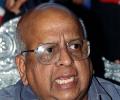
So, he approached Rajiv Gandhi and the then president Venkataraman and was advised by both to accept it only if no other job was available.

The Supreme Court on Tuesday said the Constitution has vested enormous powers on the "fragile shoulder" of the chief election commissioner and the two election commissioners and it wants a CEC of strong character like late T N Seshan.

The government has provided Chief Election Commissioner Rajiv Kumar with a Z-category VIP security cover of armed commandos in view of potential threats against him, official sources said on Tuesday.
The legendary Seshan was not keeping good health for the past couple of years and he passed away at about 9.30 pm, a senior police official told PTI.

Till he took over, political parties ferrying people to the polling stations was considered quite 'normal', and it was during Seshan's stint that it became impossible with the model code being made sacrosanct.
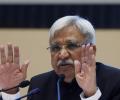
'The EC is a sacred institution.' 'In the last few years, more than once, we have found the EC bending over backwards to accommodate the government.'
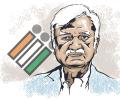
'Just as the monkey god needed a Jambavan to prod him into realising his superpowers, so did the poll panel need a poke from the Supreme Court into remembering it had an armoury of powers at its disposal to stop the infractions,' notes Saisuresh Sivaswamy.

'For politicians, winning the next election has become more important than economic stability of the country and broader national interest.'

Taking potshots at the Bharatiya Janata Party, some opposition leaders also wondered if Goel resigned to contest the Lok Sabha polls on its ticket like former Calcutta high court judge Abhijit Gangopadhyay.

'Even the President does not have the power to overrule the ECI.'

Jagdish Chhokar, founder-member of the Association for Democratic Reforms says there should be a law to regulate the functioning of political parties.

'India's election process is smoother, more efficient, more credible, cheaper to conduct and quicker to deliver than any other large democracy, including the United States. It seems to me that the election process is getting better with each passing year and it is something all Indians can be very proud of,' says Aakar Patel.

'The collegium system will remove any such doubts from the minds of people and the political parties.'

'A political party taking the law into its hands is objectionable, especially in the context of the 2002 incidents in Gujarat.'
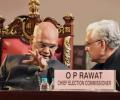
For successive governments the Election Commission remains a 'holy cow', where unhealthy precedents are allowed to be nurtured since Independence, says N Sathiya Moorthy.
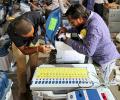
'EVMs are absolutely credible, they are robust.' 'It's only a calculator with certain instructions. And the sim card inside an EVM is burnt and cannot be reprogrammed.' 'Besides, the machines are circulated among various states. No machine is allowed to remain in one state after an election.' 'By far, it is one of the finest innovations India should be proud of.'

The EC's actions remain to be seen on 'money-hoarding and transportation' for poll-time use. The question remains if the polity in the state would push the EC so far as to use the countermanding option. Even then EC would have to push its constitutional powers to find a way to prevent 'money-power' in the state's elections, says N Sathiya Moorthy

'Bribing voters is very, very less in Kerala; I would say, almost zero... Across the border, there is so much of money power during the elections. But I don't think in Kerala, people vote for money... People of Kerala do believe that politics can bring in good governance, 'says Nalini Netto, the Chief Electoral Officer, Kerala.
 © 2026 Rediff.com - Advertise with us - Disclaimer - Privacy Policy - Sitemap - Feedback - About us - Terms of use - Grievances